Our Expertise. Your Advantage.
From structural integrity to environmental safety, we provide specialized assessments that regular inspectors simply cannot.
Home Inspection Services
A home inspection provides a comprehensive evaluation of a property’s visible and
accessible systems and components. The goal is to identify safety concerns, potential
defects, and maintenance issues so buyers, sellers, and homeowners can make informed
decisions with confidence.
Our inspections are thorough, detail-oriented, and delivered with clear, easy-to-understand
reports.
What’s Included
- Structural components (foundation, framing, walls, ceilings)
- Roofing, gutters, and exterior systems
- Electrical, plumbing, and HVAC systems
- Windows, doors, and interior components
- Appliances and built-in systems Advanced Inspection Tools & Services
Advanced Inspection Tools & Services
Drone Inspections — High-resolution aerial imaging to safely evaluate roofs, chimneys,
and hard-to-reach area
Thermal Imaging — Infrared technology to detect hidden moisture, insulation gaps,
overheating components, and energy loss
Same-Day Report Delivery — Detailed digital reports delivered quickly so you can move
forward without delays
Our Commitment
We provide accurate, unbiased inspections with professional documentation, photos, and
clear recommendations—helping you understand the property’s condition and avoid costly
surprises.

Chimney Flue Scan
A chimney flue scan is a specialized video camera inspection of the interior of a chimney flue
—the passage that safely vents smoke, heat, and combustion gases out of a home. This
service helps identify hidden defects, safety hazards, and maintenance concerns that cannot
be seen during a standard visual inspection.
Using professional chimney camera equipment, we evaluate the flue’s condition to help
ensure it is operating safely, efficiently, and in accordance with recommended standards.
What a chimney flue scan can identify
- Cracked, broken, or deteriorated flue liners
- Creosote buildup and combustible residue
- Blockages from debris, nests, or fallen materials
- Gaps, misaligned sections, or structural defects
- Moisture intrusion, staining, or corrosion
- Fire damage or unsafe conditions
Benefits of a Chimney Flue Scan
- Detects hidden hazards before they become costly repairs
- Helps reduce the risk of chimney fires and carbon monoxide exposure
- Provides documented video and photo evidence of flue conditions
- Supports informed decisions for repairs, cleaning, or continued use
- Enhances safety and peace of mind for homeowners and buyers
Sewer Scope Inspection
A sewer scope inspection is a video camera evaluation of a home’s main sewer line—the
underground pipe that carries wastewater from the house to the municipal sewer or septic
system. Because sewer lines are buried and not visible, a camera inspection is the only
reliable way to assess their condition.
Using professional sewer camera equipment, we inspect the interior of the pipe to identify
hidden defects, blockages, and conditions that could lead to backups or costly repairs.
What a Sewer Scope Can Identify
- Tree root intrusion
- Cracked, broken, or collapsed pipes
- Bellies (low spots) that collect standing water
- Pipe corrosion, scaling, or deterioration
- Grease buildup, debris, and blockages
- Misaligned or separated pipe joints
- Previous repairs or improper connections
Benefits of a Sewer Scope Inspection
- Detects costly underground issues before purchase or failure
- Helps prevent sewer backups and property damage
- Provides video documentation and visual evidence
- Supports informed decisions on repairs or negotiation
- Reduces the risk of unexpected excavation expenses
Mold Air Testing
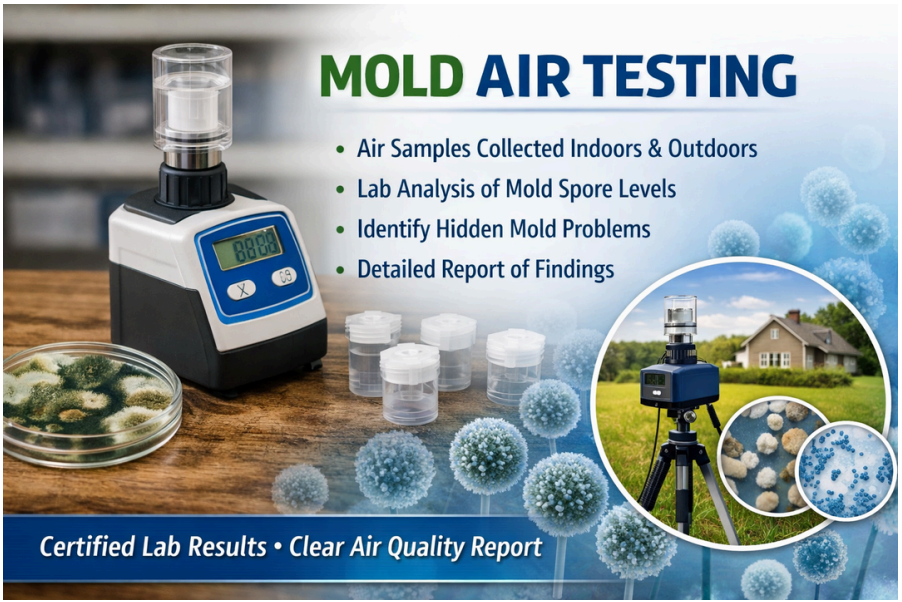
Mold air testing measures the concentration and types of airborne mold spores inside a
home to help evaluate indoor air quality and identify potential hidden mold issues. This
service is especially useful when mold is suspected but not visibly present, or when
occupants are experiencing unexplained allergy or respiratory symptoms.
Using professional air sampling equipment, we collect air samples from indoor living areas
and compare them to an outdoor control sample. These samples are sent to a certified
laboratory for analysis to determine spore levels, species, and whether indoor mold
concentrations are elevated.
How Mold Air Testing Is Performed
- Air samples are collected from key indoor areas using calibrated sampling equipment
- An outdoor control sample is taken for comparison and baseline reference
- Samples are sent to a certified laboratory for microscopic analysi
- Lab results identify mold spore types and concentration levels
- Findings are reviewed and explained in a clear, easy-to-understand report
What Mold Air Testing Can Reveal
- Elevated indoor mold spore levels
- Hidden mold growth not visible during a visual inspection
- Potential air quality concerns affecting occupants
- Areas that may require further investigation or remediation
Benefits of Mold Air Testing
- Provides objective, lab-based evidence of indoor mold condition
- Helps guide remediation and corrective actions
- Supports informed decisions for homeowners, buyers
- Offers peace of mind regarding indoor air qualits
Radon Testing
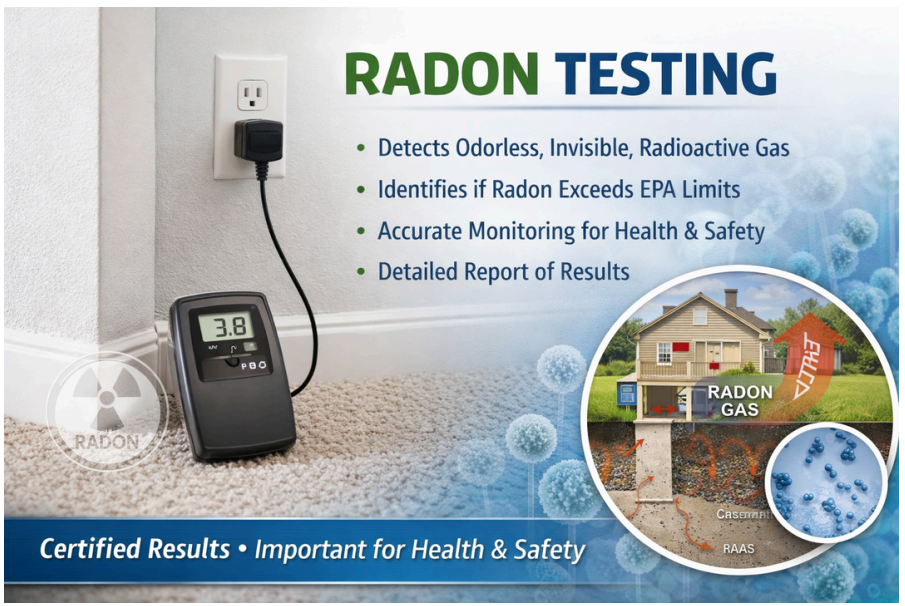
Radon testing measures the level of radon gas in a home—a naturally occurring, odorless,
colorless radioactive gas that can accumulate indoors. Radon exposure is a leading cause of
lung cancer among non-smokers, making testing an important step in protecting your
household’s health and safety.
Using professional radon monitoring equipment, we measure indoor radon levels over a set
testing period and provide clear, easy-to-understand results.
What a Radon Test Does
- Measures radon gas levels inside the home
- Provides accurate, time-based monitoring results
- Helps determine if mitigation may be needed
Benefits of Radon Testing
- Helps protect occupants from long-term health risks
- Provides documented results for buyers, sellers, and homeowners
- Supports informed decisions about radon mitigation systems
- Offers peace of mind regarding indoor air quality and safety
Why Radon Testing Matters
Radon can enter homes through cracks in foundations, crawlspaces, and slab openings.
Because it cannot be seen or smelled, testing is the only reliable way to know your home’s
radon level